Program Features
With a goal of reducing bias and building community, the program features a virtual reality experience, conversations with digital Holocaust survivors, a community photo exhibit, one-on-one student dialogues to promote empathy, and strong collaborations with secondary schools. The program fosters an interdisciplinary approach that is customizable and sustainable.
Virtual Reality Experience
Using The Journey Back from the Illinois Holocaust Museum and Education Center, students hear survivor stories and tour key Holocaust sites, including Auschwitz Death Camp.
Interactive Testimony
IWitness from the USC Shoah Foundation allows students to learn from the testimony of Holocaust survivors and ask them questions. Teachers receive training to facilitate the testimony, so the program is sustainable in the school in future.
Community Photo Exhibit
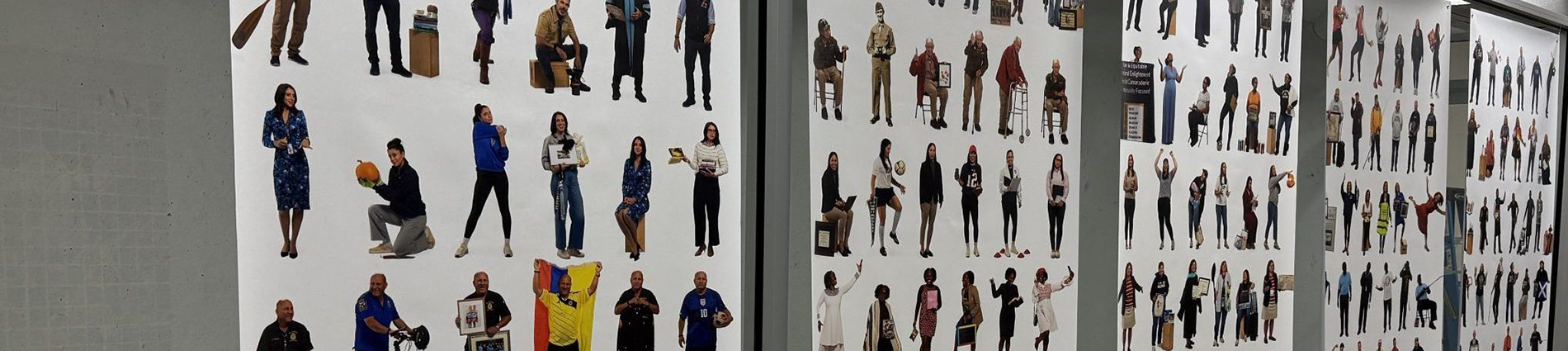
Focused on the multiple roles of members of the school and larger community, the photographs not only integrate community members into the experience but also promote community building and sustainability of the program.
School Partnerships
Each school gets a customized experience, in which the program is modified for each school and community to meet their goals. All aspects of the program are interdisciplinary and sustainable, involving multiple departments and subject areas.
Learn More
Hear more about the program from Dr. Marcus on the UConn 360 podcast.
This project is inspired by a program created by the non-profit Common Circles in White Plains, New York, but is not affiliated with Common Circles. Common Circles works to "make a difference in our world by creating research-based interactive experiences that combine techniques from psychology with cutting-edge technology, the arts, and story-telling."